The Complete Charcoal Guide for Hibachi Grilling
Here's the thing about hibachi grilling — it's dead simple, but the charcoal you chuck in there makes a massive difference. Use the wrong stuff and you'll be waiting ages for heat, getting weird chemical flavours, or watching your coals burn out halfway through cooking the snags.
I've tested pretty much every charcoal you can buy in Australia on our hibachi grills, and I reckon most blokes overcomplicate this. So let's sort it out properly.
Lump Charcoal vs Briquettes — What's the Difference?
Lump Charcoal (The Good Stuff)
Lump charcoal is just wood that's been burned down in a low-oxygen environment. No binders, no fillers, no mystery chemicals. You crack open the bag and you'll see actual chunks of wood — irregular shapes, different sizes, the lot.
For hibachi grilling, lump charcoal is the go. Here's why:
It lights faster. You can have usable coals in 15-20 minutes with a chimney starter. Briquettes take closer to 25-30.
It burns hotter. Lump charcoal can push past 700°C if you let enough air in. That's exactly what you want for searing steak on a hibachi — proper Maillard reaction, crispy edges, juicy middle.
It responds to airflow. This is the big one for hibachi grills. Open the vents and lump charcoal fires up quick. Close them down and it calms right down. That responsiveness is gold when you're cooking yakitori skewers at 250°C one minute and searing wagyu at 500°C the next.
Less ash. Lump produces maybe a third of the ash that briquettes do. On a hibachi grill where the firebox is compact, that matters heaps. Too much ash chokes the airflow and kills your heat.
Briquettes (The Consistent Option)
Briquettes are compressed charcoal dust mixed with binders (usually starch) pressed into uniform pillow shapes. The ones you see stacked up at Bunnings in summer — that's briquettes.
They're not bad. They burn at a steady temperature (around 230-260°C) for ages, which is brilliant for low-and-slow smoking. But for hibachi grilling? They've got some downsides:
Slower to light. The binders need to burn off first, which is why they taste rank if you cook on them too early. Wait until they're fully ashed over — grey all the way through — before putting any food on. That takes a solid 25-30 minutes.
More ash buildup. In a compact hibachi firebox, briquette ash accumulates fast. You'll need to shake the grate or tap the grill every 30 minutes to keep air flowing.
Lower peak temperature. Briquettes max out around 300-350°C. Fine for burgers and sausages, but you won't get that blistering sear you're after for Japanese-style grilling.
The Verdict
For hibachi grilling: lump charcoal, every time. Save the briquettes for your mate's Weber kettle when he's doing the Christmas low-and-slow brisket.
Best Charcoal for Hibachi Grilling in Australia
Ironbark Lump Charcoal
This is the gold standard in Australia and honestly, we're lucky to have it. Ironbark is one of the densest hardwoods going, which means the charcoal burns hot, burns long, and produces minimal smoke once it's lit.
A 10kg bag of quality ironbark lump will set you back $25-40 depending on where you buy it. Sounds steep compared to the $12 Bunnings briquettes, but kilo for kilo it lasts way longer and performs way better.
Look for: Heat Beads Hardwood Lump, Gidgee charcoal, or any local producer selling ironbark or gidgee lump at weekend markets.
Mangrove Charcoal (Binchotan Style)
If you want to go full Japanese authenticity, binchotan (white charcoal) is what the yakitori joints in Tokyo use. It burns incredibly clean at a steady 400-500°C for hours. The catch? Genuine binchotan costs $40-60 per kilo. That's not a typo.
A decent middle ground is mangrove charcoal, which you can find at Asian grocers for around $8-15 for a 5kg bag. It burns cleaner than most lump charcoal but doesn't quite hit binchotan levels. Worth trying if you're doing a proper yakitori session.
What to Avoid
Instant-light charcoal: Those pre-soaked briquettes with lighter fluid baked in. They stink, they taste awful, and the chemicals have no business being near your food.
Pine or softwood charcoal: Burns fast, produces heaps of sparks, and leaves a resinous flavour. Hard pass.
Mystery bags with no wood type listed: If the bag doesn't tell you what wood it's made from, it's probably a blend of whatever was cheap. You get what you pay for.
How to Light Charcoal for Hibachi Grilling
Method 1: Chimney Starter (Recommended)
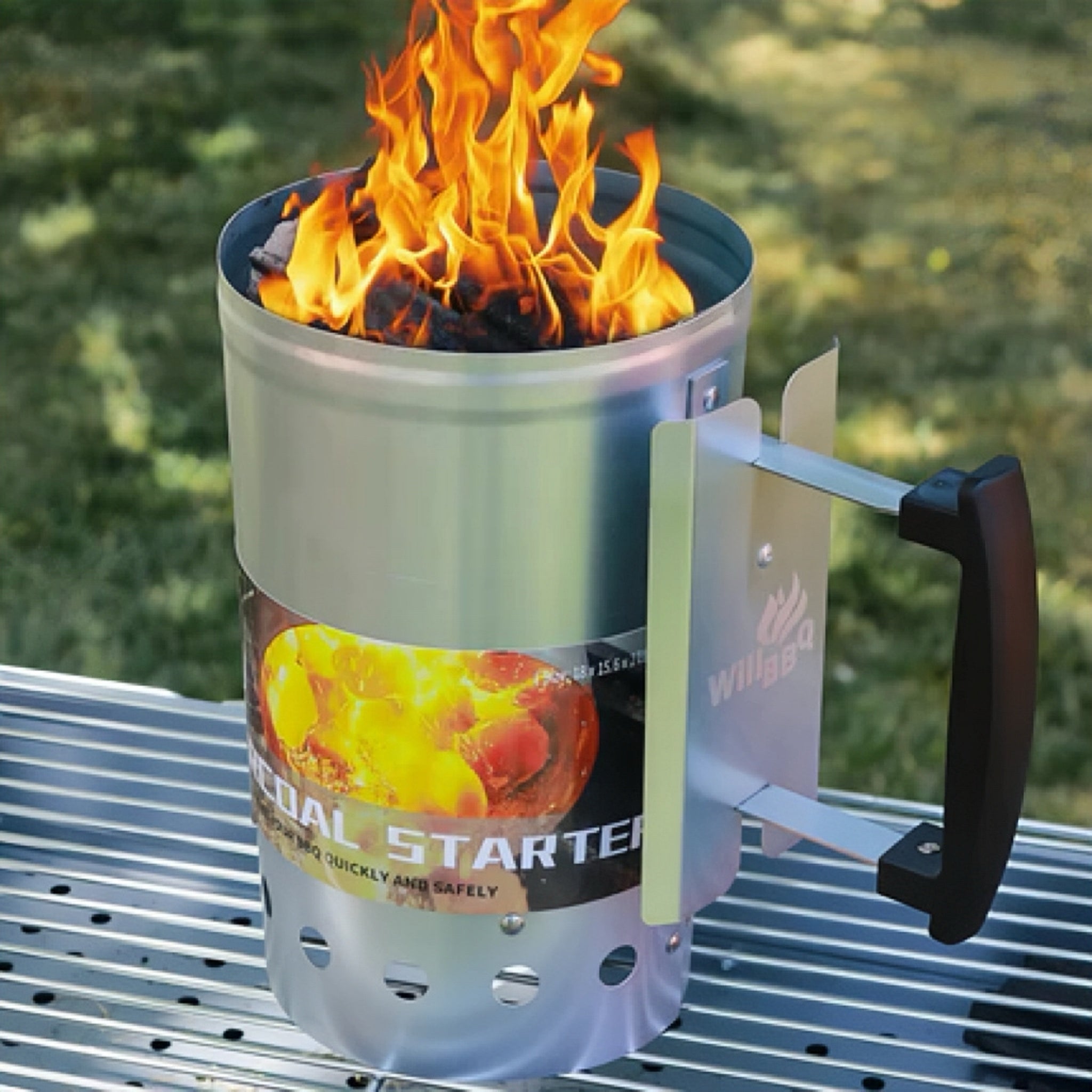
A chimney starter is the single best investment you'll make for charcoal grilling. About $20-30, lasts for years, and gets your coals ready in 15-20 minutes with zero chemicals.
Here's the process:
Step 1: Scrunch up two sheets of newspaper or a couple of fire starter cubes and put them in the bottom chamber.
Step 2: Fill the top chamber with lump charcoal. For a standard hibachi grill (40-60cm), you want about half to three-quarters of a chimney's worth.
Step 3: Light the newspaper through the holes at the bottom. Set the chimney on a heat-safe surface — a spare grill grate, concrete, or even in the hibachi itself.
Step 4: Wait 15-20 minutes. You'll see flames shooting out the top at first, then the coals will start to glow orange and develop a light grey ash coating. When the top coals are glowing, you're good to go.
Step 5: Pour the coals into your hibachi firebox. Use tongs or heat-proof gloves — the chimney handle gets warm even with heat shields.
Method 2: Fire Starters + Stack
No chimney? No dramas. Stack your lump charcoal in a small pyramid in the hibachi firebox, tuck two or three natural fire starters (the waxy cube ones from Bunnings work great) underneath, and light them up.
This method takes longer — about 25-30 minutes to get all the coals going — and you'll need to rearrange them with tongs once they're lit. But it works fine in a pinch.
Method 3: The Blowtorch
Look, it's not elegant, but a butane kitchen torch or even a cheap blowtorch from Bunnings will light lump charcoal in about 30 seconds per spot. Hit three or four spots across the charcoal bed, wait 15 minutes for it to spread, and you're cooking.
This is actually a ripper method for the smaller 18-30cm hibachi grills where a chimney starter is overkill.
What NOT to Do
Never use lighter fluid. It leaves a petroleum taste on your food that takes ages to burn off. Plus it flares up unpredictably in a compact hibachi. Just don't.
Don't rush it. Cooking on charcoal that isn't fully lit means uneven heat, excess smoke, and off-flavours from partially burned wood. Be patient. Have a beer. The coals will be ready when they're ready.
Temperature Control on a Hibachi Grill
This is where hibachi grilling gets fun. Unlike a gas BBQ where you just turn a knob, charcoal temperature control is all about two things: airflow and coal arrangement.
Using the Vents
Most quality hibachi grills have adjustable vents on the bottom and sometimes the sides. More air = more oxygen = hotter fire. Simple as that.
Vents wide open: Maximum heat, 500-700°C at the grate. Perfect for searing steaks and getting char on yakitori.
Vents half open: Medium heat, 300-400°C. Good for chicken, prawns, vegetables — things that need a bit more time without burning.
Vents nearly closed: Low heat, 150-250°C. Useful for keeping things warm or finishing thicker cuts gently.
Adjusting Grill Height
Some of our hibachi grills have adjustable grate heights. Raising the grate away from the coals drops the cooking temperature significantly — moving from 5cm to 15cm above the coals can drop temperatures by 150-200°C.
Coal Zones
Here's a trick the Japanese yakitori masters use: don't spread your coals evenly. Push more coals to one side for a hot zone and leave the other side with fewer coals for a cooler zone. That way you can sear on the hot side and move things to the cool side to finish cooking without burning.
On a longer grill like the 120cm hibachi, you can set up three zones — hot, medium, and resting. Absolutely brilliant for cooking a full spread of different foods at once.
How Long Does Charcoal Last in a Hibachi?
This depends on the charcoal type, how much you use, and your vent settings. But here's a rough guide:
Lump charcoal (vents open): 45-60 minutes of strong cooking heat. You'll get another 20-30 minutes of medium heat as it dies down.
Lump charcoal (vents half closed): 90 minutes to 2 hours of steady medium heat.
Briquettes: 2-3 hours of steady heat, but at lower peak temperatures.
Binchotan/mangrove: 3-4 hours of remarkably consistent heat. This is why the yakitori restaurants use it — they fire it up at the start of service and it lasts all night.
For a typical backyard cook on a hibachi — four to six people, doing some skewers, steaks, maybe some veggies — a chimney starter's worth of lump charcoal (about 2-3kg) will see you through easily.
Topping Up Mid-Cook
If you need more heat mid-session, add fresh lump charcoal directly onto the burning coals. The existing heat will light the new stuff in about 10 minutes. Don't add too much at once — a handful at a time is the go. Adding a whole pile will temporarily drop your temperature as the new coals absorb heat before igniting.
Charcoal Storage Tips
Moisture is the enemy. Damp charcoal is an absolute pain to light and produces way more smoke than it should.
Keep it dry: Store bags in the garage or shed, off the ground. A plastic tub with a lid works perfectly.
Reseal open bags: Roll the top down and clip it, or tip remaining charcoal into a bucket with a lid.
Buy in bulk: A 20kg bag of ironbark lump is way better value than two 10kg bags. If you're grilling regularly, you'll go through it.
Quick Reference: Charcoal Amounts for WillBBQ Grills
18-30cm hibachi: About 500g-1kg of lump charcoal per session. Light it in the grill directly — no chimney needed.
40-60cm hibachi: 1.5-2.5kg per session. Half a chimney starter's worth.
80-120cm hibachi: 3-5kg per session. One to two chimney loads. The 120cm grill has a big firebox, so fill it up if you're cooking for a crowd.
Commercial hibachi (100cm x 35cm): 4-6kg per session. The wider firebox on the commercial model needs more coals spread across the larger area.
Wrapping Up
Get yourself a bag of quality Aussie ironbark lump charcoal, a chimney starter, and some patience. That's genuinely all you need to get amazing results on a hibachi grill. No fancy gadgets, no special techniques — just good charcoal, proper airflow, and food cooked over real fire the way it's meant to be.
The charcoal you use is probably the single biggest factor in how your food tastes on a hibachi. Spend the extra $10 on decent lump and you'll taste the difference from the first cook.
Ready to get grilling? Check out our full range of hibachi grills and accessories including chimney starters. Free shipping on all grills and orders over $50, or pick up from our Springvale store weekdays 9am-4pm.
Share:
The Complete Guide to Hibachi Grilling at Home
Hibachi Grill vs BBQ: What's the Difference and Which Is Better?